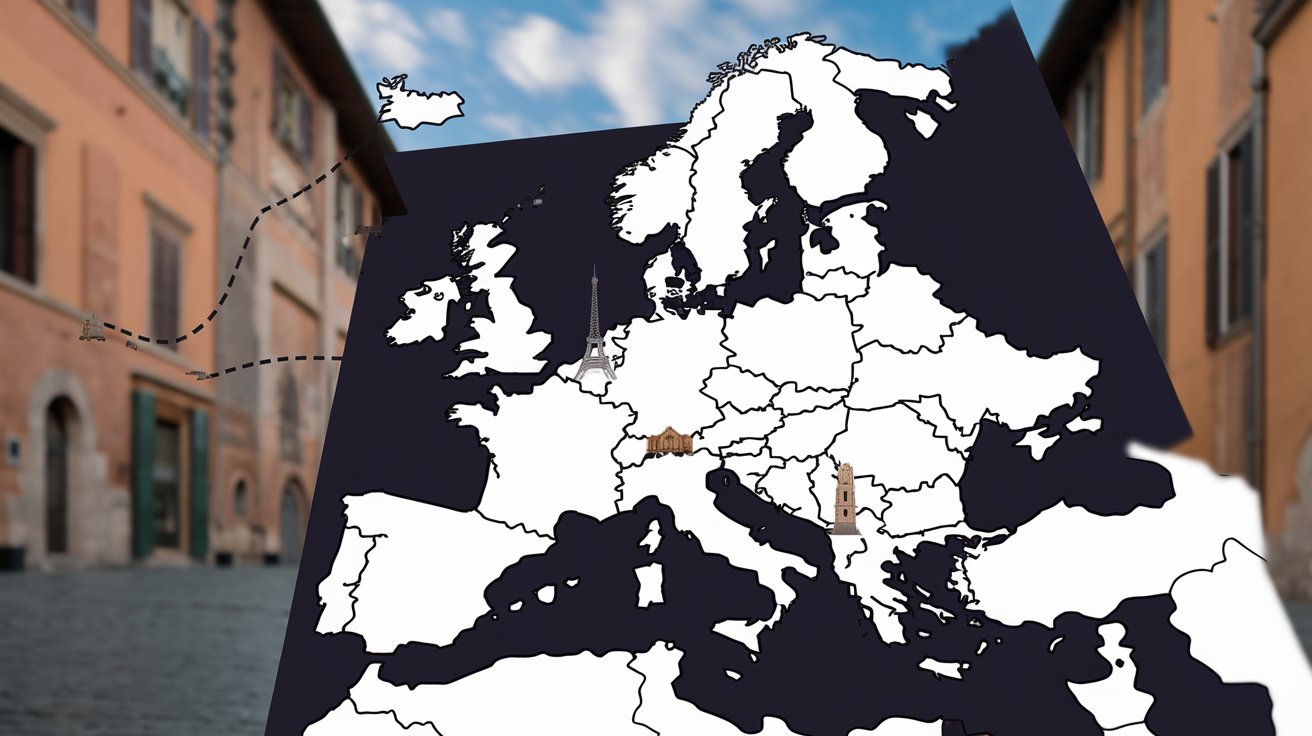
Planning a trip to Europe requires careful preparation across multiple areas including budget allocation, destination selection, and timing optimization. This comprehensive guide provides actionable strategies for American travelers in 2026, covering everything from cost estimation to itinerary building. Whether you’re planning a 10-day adventure or a multi-week exploration, understanding the fundamental planning steps ensures a smoother, more enjoyable European experience.
Determining Your Europe Trip Budget
The average European vacation budget for Americans in 2026 ranges from $3,500 to $8,000 per person for two weeks, depending on travel style and destinations. This includes flights averaging $800-1,400 from major US cities, accommodation at $80-200 per night, daily expenses of $100-150, and intercity transportation. Budget-conscious travelers can reduce costs by visiting Eastern European countries like Poland, Czech Republic, or Hungary where daily expenses drop to $60-90. Western European destinations including Switzerland, Norway, and Iceland require budgets at the higher end, often exceeding $200 daily for comfortable travel.
Creating a detailed budget breakdown prevents overspending and financial stress during your journey. Allocate 30-35% for flights and accommodation combined, 40-45% for food and activities, 15-20% for transportation within Europe, and maintain a 10% buffer for unexpected expenses. Use budgeting apps like Trail Wallet or TravelSpend to track expenses in real-time. Consider purchasing a travel credit card with no foreign transaction fees and travel rewards to maximize value on purchases throughout your European adventure.
Choosing the Best Time to Visit Europe
The cheapest months to visit Europe from the United States are November through March (excluding Christmas and New Year weeks), with flight prices dropping 30-40% compared to summer peaks. January and February 2026 offer the most significant savings, with roundtrip tickets from East Coast cities averaging $550-750 versus $1,200-1,600 in July. However, shoulder seasons of April-May and September-October provide optimal balance between affordability and pleasant weather, with moderate temperatures, fewer crowds, and prices 15-25% lower than peak summer rates.
Weather considerations significantly impact your Europe travel experience throughout different seasons. Mediterranean destinations like Spain, Italy, and Greece shine during spring and fall with temperatures of 60-75°F, while northern countries including Scandinavia and Scotland offer comfortable conditions in summer months of June-August. Winter travel suits those interested in Christmas markets across Germany, Austria, and Czech Republic, or skiing in the Alps. Summer 2026 predictions indicate continued high temperatures across Southern Europe, making coastal and northern destinations increasingly popular for heat-sensitive travelers.
How Far in Advance to Plan Your European Trip
Begin planning your European vacation at least 6-9 months before departure for optimal flight prices and accommodation availability, particularly for summer 2026 travel. Airlines typically release the lowest fares 11-12 weeks before departure, but booking 5-6 months ahead provides the best selection of routes and times. For popular destinations like Paris, Rome, Barcelona, or Amsterdam during peak season, secure accommodation 4-6 months early to access preferred neighborhoods and property types at competitive rates.
Last-minute planning remains possible but requires flexibility and acceptance of higher costs and limited options. Travelers booking within 6-8 weeks of departure often pay 40-60% premiums on flights and sacrifice preferred accommodation locations. However, spontaneous travelers can find deals on package tours, repositioning cruises, or off-season destinations. Create a planning timeline: 9 months out for initial research and passport verification, 6 months for flight and major city hotel bookings, 3 months for detailed itinerary and activity reservations, and 1 month for final confirmations and packing preparation.
Best First-Time Europe Destinations
First-time visitors should prioritize accessible, tourist-friendly destinations with excellent infrastructure and diverse attractions. The classic Western European circuit of London, Paris, Amsterdam, and Rome remains ideal for debuts, offering iconic landmarks, efficient public transportation, widespread English usage, and abundant accommodation options. These cities provide cultural immersion without overwhelming logistical challenges, featuring world-class museums, historical sites, and culinary experiences within compact, walkable areas.
Alternative first-timer destinations gaining popularity in 2026 include Portugal’s Lisbon and Porto for affordability and charm, Edinburgh for English-speaking ease and Scottish culture, and Vienna for imperial grandeur with manageable size. Barcelona combines Mediterranean beach culture with Gaudí architecture, while Dublin offers friendly locals and literary heritage. Single-country itineraries work exceptionally well for first trips, allowing deeper exploration of Italy’s Rome-Florence-Venice triangle, Spain’s Madrid-Barcelona-Seville route, or a comprehensive UK tour covering London, Edinburgh, and countryside regions.
Planning a 1-Week Europe Trip
A one-week European itinerary requires focused planning to maximize limited time without constant rushing. The most effective approach concentrates on 2-3 cities within the same region, allowing 2-3 full days per destination with travel days strategically positioned. Popular week-long combinations include London and Paris via Eurostar, Rome and Florence with high-speed rail connections, or Barcelona and Madrid exploring Spanish culture. This concentrated approach provides meaningful experiences rather than superficial airport-to-hotel routines across five countries.
Optimize your limited time by arriving on an overnight flight to gain an extra half-day, booking accommodations in central neighborhoods to minimize transit time, and pre-purchasing skip-the-line tickets for major attractions. Structure each day with one major morning activity, afternoon exploration or secondary attraction, and evening neighborhood wandering with local dining. Avoid over-scheduling that eliminates spontaneity and recovery time from jet lag. Consider direct flights home rather than positioning in a third city, preserving your final day for relaxed sightseeing rather than stressful airport transfers.
Building a 10-Day Europe Itinerary
Ten days allows more comprehensive European exploration while maintaining reasonable pacing and deeper cultural connection. Effective strategies include exploring 3-4 cities with logical geographic flow, dedicating 2-3 nights per location to balance discovery with relaxation. Regional focus prevents excessive travel time: Mediterranean routes combining Barcelona, French Riviera, and Italian coast; Central European paths through Prague, Vienna, and Budapest; or British Isles journeys across London, Edinburgh, and Dublin.
Scandinavian Highlights Circuit
A 10-day Scandinavian itinerary typically covers Copenhagen (3 nights), Stockholm (3 nights), and Oslo (3 nights) with travel days strategically placed. This route showcases distinct Nordic cultures, impressive design heritage, and stunning natural scenery accessible from urban centers. Budget $200-250 daily as Scandinavia ranks among Europe’s most expensive regions, but quality experiences and efficient infrastructure justify costs. Book trains between cities for scenic routing, or utilize budget flights for time savings on the Copenhagen-Stockholm-Oslo triangle.
Alpine Adventure Through Three Countries
Exploring the German, Austrian, and Swiss Alps combines mountain scenery with charming villages and outdoor activities. Start in Munich (2 nights) for Bavarian culture and beer gardens, continue to Innsbruck (2 nights) accessing Tyrolean peaks, proceed to Lucerne (2 nights) for Swiss lake and mountain beauty, and conclude in Zurich (2 nights) for urban sophistication. Summer offers hiking and scenic train routes, while winter provides world-class skiing at resorts like St. Anton, Zermatt, or Garmisch-Partenkirchen. Utilize the Swiss Travel Pass for unlimited train, bus, and boat transportation within Switzerland.
Classic United Kingdom Tour
A UK-focused 10-day trip eliminates language barriers for American travelers while offering rich historical and cultural diversity. Allocate 4 nights in London for museums, theaters, and neighborhoods, 3 nights in Edinburgh exploring Scottish heritage and dramatic landscapes, 2 nights in the Cotswolds or Lake District for countryside beauty, and a final night back in London for departure convenience. This itinerary provides English-speaking comfort ideal for first-time international travelers, excellent train connectivity via Virgin Trains and LNER, and diverse experiences from royal palaces to Highland scenery without crossing international borders.
Structuring a 2-Week Europe Trip
Two weeks represents the sweet spot for European travel from the United States, providing sufficient time for meaningful exploration across 4-6 destinations without excessive vacation time requirements. This duration allows deeper cultural immersion, day trip opportunities from base cities, and recovery time from jet lag while maintaining travel momentum. Structure your two-week itinerary with a mix of major cities, smaller towns, and perhaps one countryside region, balancing iconic attractions with authentic local experiences beyond tourist centers.
Celtic Culture in Ireland and Scotland
Exploring Celtic heritage across Ireland and Scotland creates a cohesive cultural narrative over two weeks. Begin in Dublin (3 nights) for literary history and vibrant pub culture, drive the Wild Atlantic Way to Galway (2 nights) experiencing rugged coastal beauty, visit the Cliffs of Moher and Dingle Peninsula, then fly to Edinburgh (3 nights) for Scottish capital highlights. Continue to the Scottish Highlands with stops in Inverness (2 nights), Isle of Skye (2 nights) for dramatic landscapes, and Glasgow (2 nights) for urban culture. This itinerary provides English-language ease, stunning natural scenery, friendly locals, and deep historical connections between these Celtic nations.
Extended Scandinavia Including Finland and Estonia
Adding Finland and Estonia to a Scandinavian journey provides unique Nordic and Baltic perspectives. Begin in Copenhagen (2 nights), continue to Stockholm (3 nights), take an overnight ferry to Helsinki (3 nights) experiencing Finnish sauna culture and modern design, hop the quick ferry to Tallinn (2 nights) for medieval charm and affordability, return via Stockholm, and conclude in Oslo (2 nights). This route offers geographic diversity from Scandinavian capitals to Baltic history, with Estonia providing budget relief from expensive Nordic prices. Summer white nights and Christmas markets make seasonal highlights, while ferries between cities create memorable travel experiences.
Iceland and Greenland Adventure
Combining Iceland and Greenland creates an extraordinary Arctic experience for adventurous travelers. Spend 8-9 nights in Iceland exploring Reykjavik, Golden Circle, South Coast waterfalls, Jökulsárlón glacier lagoon, and perhaps Akureyri in the north. Allocate 4-5 nights in Greenland visiting Ilulissat for icebergs, experiencing Inuit culture, and exploring dramatic fjords. This itinerary requires significant budget allocation of $8,000-12,000 per person due to remote locations and expensive logistics, but provides once-in-a-lifetime experiences with minimal tourist crowds. Book well in advance as Greenland accommodation fills quickly during the brief summer season from June to August.
Designing 3-Week Europe Itineraries
Three weeks allows comprehensive multi-country exploration with comfortable pacing, incorporating major cities, smaller towns, countryside regions, and potential rest days. This duration suits travelers seeking deep cultural immersion, diverse experiences across multiple regions, and flexibility to adapt plans based on discoveries and recommendations. Structure longer itineraries with thematic coherence such as coastal routes, mountain regions, or cultural circuits rather than random city hopping, creating narrative flow and reducing decision fatigue throughout your journey.
Slow Travel Through Scandinavia and Iceland
A leisurely three-week Nordic journey emphasizes quality over quantity, allowing 4-5 nights per destination. Begin in Copenhagen (4 nights) thoroughly exploring Danish design, Tivoli Gardens, and day trips to Kronborg Castle, continue to Oslo (5 nights) with fjord excursions and Viking history, proceed to Stockholm (5 nights) discovering archipelago islands and Gamla Stan, and conclude in Reykjavik (5 nights) for Iceland’s Golden Circle, South Coast, and Blue Lagoon. This slow travel approach reduces stress, allows deeper neighborhood exploration, provides time for spontaneous discoveries, and creates more sustainable, meaningful travel experiences compared to rushed multi-city sprints.
Three Weeks Exploring the Alps
Dedicating three weeks to Alpine regions allows comprehensive exploration across multiple countries and seasonal activities. Summer itineraries include hiking bases in Chamonix (4 nights), Zermatt (3 nights), Dolomites (4 nights), Interlaken (3 nights), and Innsbruck (3 nights), with remaining days for scenic train journeys and smaller mountain villages. Winter versions focus on skiing destinations like Verbier, St. Anton, Cortina, and Garmisch-Partenkirchen. This specialized itinerary suits outdoor enthusiasts, provides stunning scenery throughout, and offers consistent activities rather than cultural whiplash from constant country changes. Utilize rail passes like Swiss Travel Pass and invest in quality hiking or ski gear for maximum enjoyment.
English-Speaking Europe Immersion
A three-week English-speaking circuit eliminates language barriers while providing diverse experiences across Ireland, Scotland, and England. Allocate one week in Ireland covering Dublin, Cork, Galway, and countryside drives, one week in Scotland exploring Edinburgh, Highlands, Isle of Skye, and Glasgow, and one week in England visiting London, Bath, Cotswolds, and York. This approach works exceptionally well for first-time international travelers or those uncomfortable with foreign languages, while still delivering authentic European culture, history, and landscapes. Enjoy literary connections from Joyce to Rowling, access to theater and live music, and ease of communication for deeper local interactions.
Booking Flights from the USA to Europe
Securing affordable transatlantic flights requires strategic timing and flexibility with dates and airports. The lowest fares from the United States to Europe typically appear on Tuesdays and Wednesdays for travel, with booking sweet spots 5-6 months before summer travel or 2-3 months for off-season trips. Major gateway cities like New York, Boston, Chicago, and Washington DC offer the most competitive pricing with direct routes averaging $700-900 roundtrip to major European hubs. Consider alternative departure airports like Newark instead of JFK, or Baltimore instead of Washington Dulles, sometimes saving $100-200 per ticket.
Utilize flight comparison tools like Google Flights, Skyscanner, and Kayak to identify patterns and price alerts for your desired routes. Book directly with airlines when prices match aggregators to ensure easier modifications and customer service. Consider positioning flights that connect through hubs like Reykjavik, Dublin, or Lisbon on carriers like Icelandair, Aer Lingus, or TAP Portugal, often offering free stopovers that add an extra destination to your itinerary. Premium economy increasingly provides good value for overnight flights with better sleep quality, potentially justifying 40-60% higher costs for improved trip start and jet lag management.
Selecting European Accommodation
Choosing the right accommodation type and location dramatically impacts your European experience and daily convenience. Hotels provide consistency, daily cleaning, and reception services, while vacation rentals through Airbnb or Vrbo offer more space, kitchen facilities, and local neighborhood immersion at often lower costs for groups. Hostels serve budget travelers with shared dorms from $25-45 nightly, though private rooms increasingly compete with budget hotel pricing. Location trumps amenities, with central neighborhoods near public transit saving hours and money on daily transportation despite higher nightly rates.
Book strategically across your itinerary based on city characteristics and duration. Splurge on better locations in cities where you’ll spend most time, accept more basic options for overnight stops between destinations, and consider vacation rentals for stays exceeding 3-4 nights. Research neighborhood characteristics: Trastevere in Rome for charm, Le Marais in Paris for central walkability, Jordaan in Amsterdam for canal views. Read recent reviews focusing on location accuracy, cleanliness, and host responsiveness rather than perfect scores that may indicate fake reviews. Verify cancellation policies allowing flexibility for itinerary adjustments without financial penalties.
Transportation Between European Cities
Efficient intercity transportation requires matching methods to distances and budgets. Trains work best for journeys under 4 hours, offering city-center to city-center convenience without airport security delays. High-speed rail networks including France’s TGV, Spain’s AVE, Italy’s Frecce, and Germany’s ICE provide comfortable travel at 180-220 mph with advance booking discounts of 40-60% compared to walk-up fares. Book popular routes like Paris-London, Rome-Florence, or Barcelona-Madrid 2-3 months early for optimal pricing averaging $40-80 versus $150-200 last-minute.
Budget airlines including Ryanair, EasyJet, Wizz Air, and Vueling offer incredibly low base fares of $20-60 for flights exceeding 4 hours travel time by train. However, factor additional costs for baggage ($15-35 per bag), airport transfers ($10-30 each way), and time lost to security and boarding processes. Calculate total journey time from city-center to city-center rather than just flight duration. Rental cars provide flexibility for countryside exploration and multi-stop itineraries but incur costs of $40-80 daily plus fuel, parking ($20-40 daily in cities), and highway tolls. Consider rail passes like Eurail for extensive multi-country train travel, calculating break-even points against individual ticket costs based on your specific itinerary.
Essential Travel Documents and Requirements
US citizens require a valid passport with at least six months validity beyond planned departure date from Europe, though many European countries accept three months beyond departure. Apply for new passports 6-9 months before travel as processing times extended to 10-13 weeks for routine service in 2026, with expedited options available for $60 additional fee reducing to 7-9 weeks. European destinations don’t require pre-arrival visas for American tourists staying under 90 days within any 180-day period, though the new ETIAS authorization system launches fully in 2026 requiring online registration costing €7 valid for three years.
Comprehensive travel insurance protects against trip cancellations, medical emergencies, and lost belongings, with policies ranging from $100-300 for two-week trips depending on coverage levels and traveler age. European medical care for Americans costs significantly without insurance, with emergency room visits starting at $500-1,000 and serious incidents reaching tens of thousands. Verify your health insurance covers international travel, purchase supplemental coverage if not, and carry both physical and digital copies of important documents including passport, insurance cards, credit cards, and emergency contact information stored in secure cloud storage accessible worldwide.
Managing Money and Payments in Europe
The euro serves as currency across 20 European countries, simplifying transactions throughout much of the continent. However, United Kingdom uses pounds sterling, Switzerland uses Swiss francs, and Scandinavian countries maintain their own currencies despite EU membership. Obtain minimal local currency from US banks before departure for immediate arrival needs like transportation or small purchases, then rely primarily on ATM withdrawals at destination for better exchange rates compared to airport currency exchange booths that charge 8-12% premiums.
Select credit cards without foreign transaction fees and notify banks of travel dates to prevent fraud blocks on legitimate European charges. Cards with chip-and-PIN technology work best in Europe, particularly for automated machines like train ticket kiosks and parking meters. Carry backup payment methods including a second credit card from a different network and small amounts of cash for establishments that don’t accept cards. Track exchange rates and fees using apps like XE Currency, declining dynamic currency conversion at payment terminals that offers poor exchange rates disguised as convenience for seeing charges in dollars rather than local currency.
Using Multi-City Trip Planning Tools
Specialized trip planning platforms streamline complex European itineraries with routing optimization and logistics coordination. Tools like TripIt consolidate all confirmations into a single master itinerary accessible offline, while Roadtrippers and Rome2Rio calculate optimal routes and transportation options between multiple cities. Google My Maps allows creating custom maps with saved locations, color-coded by category, shared among travel companions for collaborative planning.
Leverage AI-powered planning assistants like Wanderlog and Sygic Travel that suggest attractions, optimize daily routing to minimize backtracking, and estimate realistic time requirements based on walking speeds and opening hours. Reddit’s r/travel and r/solotravel communities provide invaluable crowd-sourced advice from experienced travelers, though verify information currency as European tourism infrastructure and prices change rapidly. Join destination-specific Facebook groups for real-time updates on closures, scams, or hidden gems not yet saturated in guidebooks. Balance digital tools with traditional resources like Rick Steves guidebooks offering cultural context and historical background that pure logistics platforms miss.
Related video about how to plan a trip to europe
This video complements the article information with a practical visual demonstration.
Frequently Asked Questions
How much should I budget for a trip to Europe in 2026?
Budget $3,500-8,000 per person for a two-week European trip from the United States, including $800-1,400 for roundtrip flights, $80-200 nightly accommodation, and $100-150 daily expenses. Budget travelers can reduce costs to $2,500-4,000 by visiting Eastern Europe, staying in hostels, and eating at local markets. Luxury travelers should expect $10,000-15,000 with upscale hotels, fine dining, and business class flights. Add 10% buffer for unexpected expenses and always carry travel insurance.
What is the cheapest month to travel to Europe from the USA?
January and February 2026 offer the lowest prices with flights from East Coast cities averaging $550-750 roundtrip, compared to $1,200-1,600 in July. November through March (excluding holiday weeks) provides 30-40% savings on flights and accommodation. However, shoulder seasons of April-May and September-October balance affordability with better weather, costing 15-25% less than peak summer while offering pleasant temperatures and fewer crowds throughout most European destinations.
How far in advance should you plan a European vacation?
Begin planning 6-9 months before departure for optimal flight prices and accommodation selection, especially for summer 2026 travel. Book flights 5-6 months ahead when airlines release best fares, and secure hotels in popular cities 4-6 months early. Create a timeline: 9 months for research and passport checks, 6 months for major bookings, 3 months for detailed itinerary and activities, 1 month for final confirmations. Last-minute planning within 6-8 weeks typically costs 40-60% more with limited options.
Where should first-time visitors go in Europe?
First-timers should visit London, Paris, Rome, and Amsterdam for excellent infrastructure, iconic landmarks, and English-language accessibility. Alternative beginner-friendly destinations include Lisbon and Porto for affordability, Edinburgh for culture without language barriers, and Barcelona for Mediterranean charm. Single-country itineraries work well initially, such as Italy’s Rome-Florence-Venice route or UK’s London-Edinburgh-Cotswolds circuit. These destinations offer walkable centers, efficient public transit, abundant tourist resources, and forgiving environments for international travel newcomers.
Is planning a Europe trip on your own difficult?
Independent Europe trip planning is manageable with proper research and organization, offering flexibility and cost savings compared to group tours. Use Google Flights for airfare, Booking.com for accommodation, Rome2Rio for transportation options, and Rick Steves guides for cultural context. Start with established tourist routes for easier logistics, book major components 3-6 months ahead, and leave room for spontaneity. Join online communities like Reddit’s r/travel for advice, download offline maps, and create backup plans for popular attractions requiring advance reservations.
What should a 10-day Europe itinerary include?
A well-structured 10-day itinerary covers 3-4 cities with 2-3 nights each, maintaining geographic coherence to minimize travel time. Effective routes include Barcelona-French Riviera-Florence for Mediterranean culture, Prague-Vienna-Budapest for Central European charm, or London-Paris-Amsterdam for classic highlights. Allocate one major activity per morning, afternoon exploration, and evening neighborhood wandering. Pre-book major attractions, maintain flexible scheduling for discoveries, and avoid over-programming that eliminates rest and spontaneous experiences essential for enjoyable travel.
| Planning Element | Key Details | Benefit |
|---|---|---|
| Budget Planning | $3,500-8,000 for 2 weeks, track with apps, 10% buffer | Prevents overspending and financial stress |
| Timing | Shoulder seasons (Apr-May, Sep-Oct) for value and weather | 15-25% savings with fewer crowds |
| Advance Planning | 6-9 months for summer, book flights 5-6 months ahead | Best prices and accommodation selection |
| First-Timer Destinations | London, Paris, Rome, Amsterdam with infrastructure | Easy navigation and English accessibility |
| Itinerary Length | 2 weeks ideal, 3-4 cities, 2-3 nights each | Balance between depth and variety |
| Transportation | Trains under 4 hours, budget airlines beyond | Optimal time and cost efficiency |