Planning a trip to Ireland from the United States requires careful consideration of budget allocation, optimal timing, and itinerary design to maximize your experience. Whether you’re organizing a week-long adventure or an extended exploration, understanding the essentials of Irish travel logistics ensures a seamless journey through the Emerald Isle. This comprehensive guide provides actionable strategies for US travelers planning their 2026 Ireland vacation, covering everything from cost estimates to day-by-day itineraries.
Understanding Ireland Trip Costs for US Travelers in 2026
The average cost of a trip to Ireland from the United States ranges between $2,800 and $5,500 per person for a week-long vacation in 2026. This estimate includes roundtrip airfare ($600-$1,200), accommodation ($700-$1,800), meals ($420-$840), transportation ($300-$600), and activities ($280-$560). Budget-conscious travelers can reduce expenses to approximately $2,200 by choosing hostels, cooking some meals, and utilizing public transportation instead of rental cars.
Your daily budget in Ireland should account for $120-$180 for mid-range comfort, while luxury travelers may spend $300-$500 daily. Accommodation represents the largest expense category, with Dublin hotels averaging $180-$350 per night in peak season (June-August). Rural areas and smaller towns like Killarney or Galway offer more affordable lodging options at $90-$160 nightly. Food costs typically run $15-$25 for lunch and $30-$50 for dinner at mid-range restaurants, while pub meals provide excellent value at $18-$28 per person.
Best Time to Visit Ireland: Weather and Seasonal Considerations
The nicest months to visit Ireland are May, June, and September when you’ll experience mild temperatures (55-65°F), extended daylight hours, and fewer crowds compared to peak summer. These shoulder seasons offer the perfect balance of pleasant weather conditions and reasonable prices, with accommodation costs 20-30% lower than July-August rates. The Irish landscape displays vibrant green colors during these months, and you’ll encounter authentic cultural experiences without the overwhelming tourist presence.
Summer months (July-August) bring the warmest weather (60-68°F) but also the highest prices and largest crowds at popular attractions like the Cliffs of Moher and Ring of Kerry. Winter travel (November-February) presents the most budget-friendly option with hotel rates dropping 40-50%, though you’ll face shorter days (8 hours of daylight) and increased rainfall. Spring (March-April) offers blooming landscapes and St. Patrick’s Day celebrations, while autumn (October) showcases stunning foliage colors across the countryside with comfortable temperatures for outdoor exploration.
Essential Pre-Trip Planning from the United States
US citizens traveling to Ireland in 2026 enjoy visa-free entry for stays up to 90 days within a 180-day period, requiring only a valid passport with at least six months remaining validity. Book your flights 3-5 months in advance for optimal pricing, with direct routes available from major hubs including Boston, New York, Chicago, and San Francisco to Dublin. Consider flying into Dublin and out of Shannon (or vice versa) to maximize your itinerary efficiency and avoid backtracking across the island.
Secure travel insurance covering medical emergencies, trip cancellation, and rental car collision damage, as your US health insurance typically won’t cover international medical expenses. Ireland operates on 230V electricity requiring Type G plug adapters for your electronic devices. The currency is the Euro in the Republic of Ireland (and British Pound in Northern Ireland), with credit cards widely accepted but cash needed for small shops and rural areas. Download essential apps before departure including Google Maps offline sections, Dublin Bus, and currency conversion tools for real-time exchange rate calculations.
Choosing Between Driving and Alternative Transportation
Renting a car provides maximum flexibility for exploring Ireland’s countryside, coastal routes, and remote attractions at your own pace, though it requires adjusting to left-side driving and navigating narrow rural roads. Rental costs average $45-$85 daily for manual transmission vehicles (automatics cost $70-$120 daily), plus mandatory insurance adding $20-$40 per day. The most scenic driving routes include the Wild Atlantic Way, Ring of Kerry, and Causeway Coastal Route, where having your own vehicle transforms the travel experience dramatically.
Alternatively, Ireland’s public transportation network offers viable options for non-drivers, with Bus Éireann and Irish Rail connecting major cities and tourist destinations reliably. Private tour operators like Paddywagon and Wild Rover Tours provide multi-day guided experiences eliminating driving stress while offering social interaction with fellow travelers. This approach works particularly well for solo travelers or those uncomfortable with right-hand-drive vehicles, though it limits spontaneous detours and requires adhering to fixed schedules. Budget an extra $300-$500 for organized tours or $150-$250 for point-to-point public transit over a week-long trip.
Perfect 7-Day Ireland Itinerary for First-Time Visitors
A well-structured one-week Ireland itinerary balances iconic attractions with authentic cultural experiences while allowing sufficient time to absorb each destination without exhausting travel days. This recommended route covers approximately 600 miles, showcasing Ireland’s diverse landscapes from coastal cliffs to medieval cities, ancient monuments to vibrant urban culture. The itinerary assumes you’re renting a car for maximum flexibility, though modifications for public transportation are noted where applicable.
Days 1-2: Dublin Exploration and Arrival
Begin your Irish adventure in Dublin, arriving at Dublin Airport and collecting your rental car or taking the Airlink Express ($8) to your city-center accommodation. Spend your first afternoon recovering from jet lag while exploring nearby attractions like Trinity College and the Book of Kells ($16 entry), followed by a walk through Temple Bar’s cobblestone streets. The second day warrants a full Dublin exploration covering the Guinness Storehouse ($30), Dublin Castle ($10), and St. Patrick’s Cathedral ($9), concluding with traditional Irish music in a authentic pub rather than touristy Temple Bar establishments.
Consider purchasing the Dublin Pass ($79 for 2 days) if planning to visit multiple paid attractions, as it includes skip-the-line access and significant savings. Accommodation in Dublin averages $150-$280 nightly for quality hotels within walking distance of major sites. For budget travelers, hostels in the Smithfield or Christchurch areas offer private rooms starting at $70-$90 with excellent public transit connections to all attractions.
Days 3-4: Wild Atlantic Way and Galway
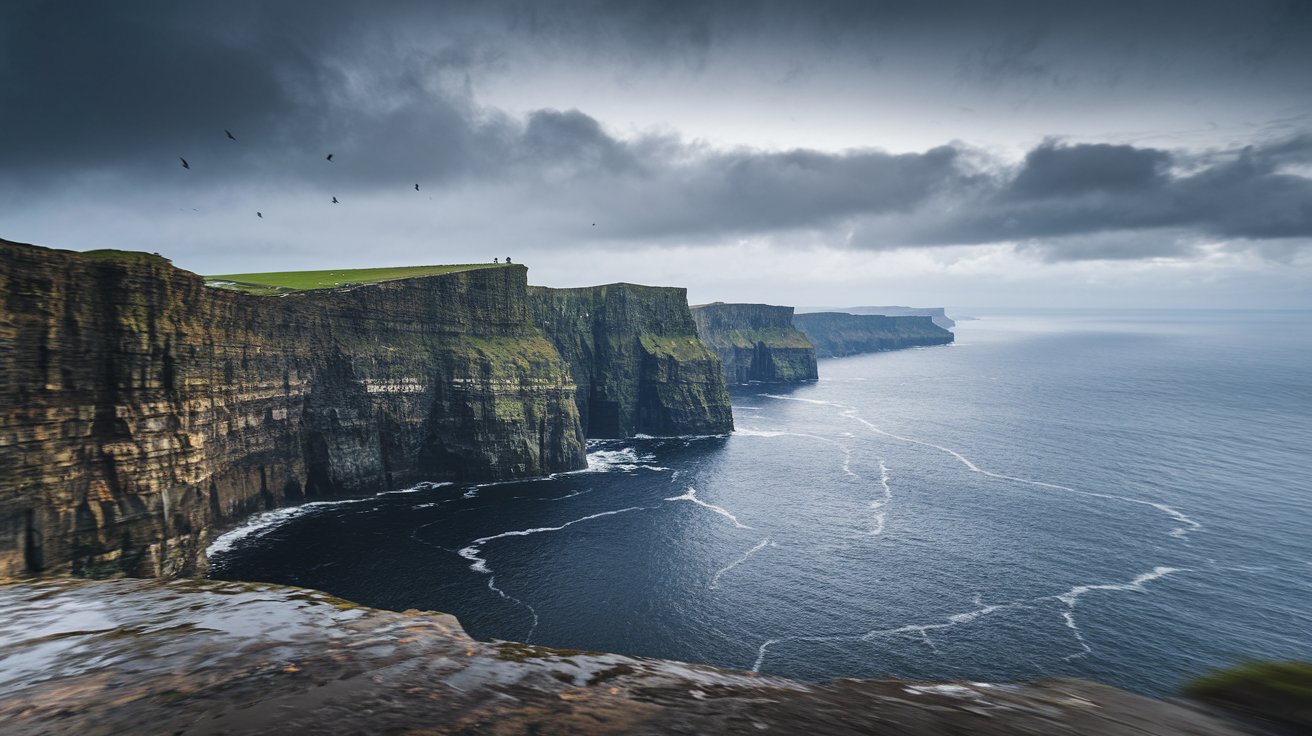
Depart Dublin westward (3 hours) toward Galway, stopping at the ancient monastic site of Clonmacnoise ($9 entry) en route. Galway serves as your base for exploring the dramatic Cliffs of Moher (1.5 hours from Galway, $12 entry), best visited early morning (8-9 AM) to avoid tour bus crowds and capture optimal lighting conditions. The Burren landscape and charming Doolin village make excellent additional stops, with traditional music sessions at Gus O’Connor’s Pub providing authentic evening entertainment.
Dedicate your fourth day to the Connemara region or Aran Islands, both accessible from Galway as day trips. Connemara offers rugged mountain scenery, Sky Road coastal views, and Kylemore Abbey ($15), while the Aran Islands (ferry $30 round-trip) showcase traditional Irish culture with ancient stone forts and Irish-speaking communities. Galway accommodation ranges from $110-$220 nightly, with the Latin Quarter providing walking access to restaurants, pubs, and the Saturday morning market featuring local crafts and foods.
Days 5-6: Ring of Kerry and Dingle Peninsula
Drive south to County Kerry (2 hours from Galway), basing yourself in Killarney for two nights while exploring the region’s spectacular scenery. The Ring of Kerry forms a 111-mile circular route requiring a full day to drive counterclockwise, stopping at viewpoints like Ladies View, Gap of Dunloe, and the colorful village of Sneem. Start early (7-8 AM) to stay ahead of tour buses and allow time for spontaneous stops at beaches, hiking trails, or craft shops along the route.
The Dingle Peninsula deserves your sixth day, offering equally stunning coastal views with fewer crowds than the Ring of Kerry. Slea Head Drive passes ancient beehive huts, Dunquin Pier, and opportunities to spot Fungie (though the famous dolphin passed in 2020, the harbor remains scenic). The town of Dingle itself charms visitors with excellent seafood restaurants, traditional music pubs, and craft breweries. Killarney accommodation averages $90-$180 nightly, with options ranging from Victorian guesthouses to modern hotels.
Day 7: Return to Dublin or Shannon Departure
Your final day depends on your departure airport, with most US flights leaving either Dublin (3.5 hours from Killarney) or Shannon (1.5 hours from Killarney) in the afternoon or evening. If departing from Shannon, stop at Bunratty Castle and Folk Park ($18) or the charming village of Adare for final photos and souvenir shopping. Those returning to Dublin might break the journey at the Rock of Cashel ($9), an impressive medieval complex sitting atop a limestone outcrop with panoramic countryside views.
Allow 3-4 hours before international flights for rental car return, check-in procedures, and security screening at Irish airports. Both Dublin and Shannon airports offer duty-free shopping with Irish whiskey, wool products, and chocolates making popular last-minute purchases. Consider mailing heavier souvenirs from Ireland Post to avoid luggage weight issues, with international shipping averaging $35-$60 for packages up to 5 pounds.
Planning Ireland on a Budget Without Sacrificing Experience
Budget travel in Ireland remains achievable through strategic planning and smart substitutions that maintain trip quality while reducing overall costs. Accommodation expenses drop significantly by booking hostels with private rooms ($60-$90 nightly), guesthouses in smaller towns rather than cities, or vacation rentals for groups. Traveling during shoulder seasons (April-May, September-October) provides the most substantial savings, with accommodation and car rental rates 30-40% lower than peak summer while weather remains generally favorable for outdoor activities.
Food costs decrease dramatically when you shop at SuperValu or Lidl supermarkets for breakfast supplies and picnic lunches, reserving restaurant meals for dinners when you can enjoy leisurely dining experiences. Many pubs offer excellent value early bird menus (5-7 PM) with three courses for $20-$25, while traditional Irish breakfasts at B&Bs (included in room rates) provide fuel for full days of exploration. Free attractions including Trinity College grounds (exterior), St. Stephen’s Green, Galway’s Latin Quarter, and countless coastal viewpoints offer memorable experiences without admission fees.
Optimal Trip Duration Based on Your Interests
The ideal Ireland trip length depends on your travel pace, specific interests, and vacation constraints, though 7-10 days provides sufficient time to experience major highlights without constant rushing between destinations. A week allows coverage of Dublin plus two-three countryside regions (like Galway, Kerry, and Cork), while 10-14 days enables a more comprehensive exploration including Northern Ireland, the northwest coast, and additional time for hiking, golfing, or genealogy research.
First-time visitors prioritizing iconic attractions should allocate a minimum of 7 days to avoid disappointment, dedicating 2 days to Dublin, 2 days to the west coast (Galway/Cliffs of Moher), 2 days to County Kerry, and 1 day for travel or flexibility. Nature enthusiasts and hikers benefit from 10-12 days, allowing multi-day stays in regions like Connemara, the Beara Peninsula, or Donegal for serious walking and outdoor activities. Those with Irish ancestry researching family history should budget extra days in ancestral regions, as genealogy research, cemetery visits, and local archive consultations require unhurried exploration.
What Experienced Travelers Wish They Knew Before Going
Many travelers underestimate Irish driving challenges, particularly narrow rural roads, roundabouts, and left-side driving adjustments that cause more stress than anticipated. Practice driving in less trafficked areas initially, and remember that distances appear short on maps but take longer due to winding roads and lower speed limits (50-60 mph on national roads). GPS navigation proves essential, though verify directions with road signs as rural areas occasionally have spotty signal coverage affecting real-time navigation accuracy.
Weather unpredictability ranks among the most common surprises, with conditions changing rapidly throughout single days requiring layered clothing rather than heavy coats. Pack a quality waterproof jacket, comfortable walking shoes suitable for wet conditions, and quick-dry clothing instead of cotton items that stay damp. The phrase four seasons in one day accurately describes Irish weather patterns, where morning rain transitions to afternoon sunshine and evening windstorms regardless of season. Additionally, most attractions and restaurants outside major cities close earlier than Americans expect (6-7 PM), particularly in rural areas, requiring advance planning for dinner reservations and activity timing.
Booking Strategy Timeline for 2026 Travel
Begin your Ireland trip planning 6-9 months before departure for optimal availability and pricing, particularly for summer travel (June-August) when accommodation in popular areas like Dingle, Doolin, and Killarney fills quickly. International flights from the US to Ireland typically offer best prices when booked 3-5 months ahead, with Tuesday and Wednesday departures generally $50-$150 cheaper than weekend flights. Set up price alerts on Google Flights or Kayak to monitor fluctuations and book when fares drop below your target price.
Rental cars should be reserved 2-4 months in advance, especially for automatic transmission vehicles which comprise only 20% of Ireland’s rental fleet and command premium prices. Major attractions requiring timed entry like the Book of Kells, Blarney Castle during peak hours, and popular distillery tours should be booked 4-8 weeks ahead to secure preferred time slots. Restaurants in Dublin, Galway, and other cities warrant reservations 1-2 weeks in advance for weekend dinners, while rural establishments typically accommodate walk-ins except during local festivals or holiday weekends.
Alternative 5-Day Express Itinerary
Travelers with limited vacation time can experience Ireland’s highlights through a concentrated 5-day itinerary focusing on a smaller geographic area rather than attempting comprehensive coverage. This accelerated schedule prioritizes quality experiences over quantity, allowing deeper engagement with fewer destinations while minimizing transit time between locations. The recommended approach concentrates on either the southern region (Dublin-Cork-Kerry-Galway) or northern circuit (Dublin-Belfast-Giant’s Causeway-Donegal), completing a logical loop without excessive backtracking.
A southern 5-day route allocates Day 1 to Dublin arrival and evening exploration, Day 2 to full Dublin sightseeing, Day 3 to driving to Galway via Clonmacnoise with afternoon Galway exploration, Day 4 to Cliffs of Moher and Burren returning to Galway, and Day 5 to morning departure or quick visit to Connemara before Shannon airport. This itinerary covers approximately 350 miles total, balancing driving with sightseeing while maintaining realistic expectations about what’s achievable within the compressed timeframe without exhausting yourself through constant movement.
Navigating Ireland Without a Car
Exploring Ireland without driving remains entirely feasible through combination strategies utilizing trains, buses, and organized day tours from major cities. Irish Rail connects Dublin with Cork, Galway, Limerick, Belfast, and other significant cities efficiently, with prices ranging $25-$60 for cross-country routes when booked in advance online. Bus Éireann’s extensive network reaches smaller towns and tourist destinations not served by rail, though journey times increase significantly compared to driving (Dublin-Dingle requires 6+ hours by bus versus 4 hours driving).
Day tour operators like Wild Rover Tours, Paddywagon Tours, and various local companies offer excellent solutions for reaching iconic attractions difficult to access via public transit. These tours typically cost $50-$90 per day including transportation and guide services, covering routes like Cliffs of Moher from Galway, Ring of Kerry from Killarney, or Giant’s Causeway from Belfast. Base yourself in strategic hub cities (Dublin, Galway, Killarney) for 2-3 nights each, using them as launching points for day trips while avoiding constant accommodation changes that complicate luggage management on public transportation.
Cultural Etiquette and Local Customs
Irish hospitality manifests through genuine friendliness and willingness to assist travelers, with locals appreciating visitors who show respect for cultural norms and make basic attempts at polite interaction. Pub culture forms the social center of Irish communities, where buying rounds (taking turns purchasing drinks for your group) represents standard practice rather than splitting individual tabs. Tipping conventions differ from the US, with 10-12% appropriate for good restaurant service, rounding up taxi fares to the nearest euro, and €1-2 per bag for hotel porters considered adequate.
The Irish value genuine conversation and storytelling, often engaging visitors in extended chats about travel experiences, Irish-American connections, or current events with authentic interest rather than transactional politeness. Avoid stereotypical Irish references like leprechauns, excessive Lucky Charms jokes, or performative attempts at Irish accents, which locals find tiresome rather than charming. Instead, ask thoughtful questions about local history, contemporary Ireland, or recommendations for authentic experiences beyond tourist attractions, demonstrating respectful curiosity about the country you’re visiting rather than relying on outdated clichés.
Related video about how to plan a trip to ireland
This video complements the article information with a practical visual demonstration.
Frequently Asked Questions
What is the nicest month to go to Ireland?
May and September represent the nicest months for visiting Ireland, offering mild temperatures between 55-65°F, extended daylight hours, and significantly fewer tourists compared to summer peak season. These shoulder season months provide optimal weather conditions for outdoor activities while maintaining lower accommodation costs and easier access to popular attractions. June also ranks highly for weather quality, though prices begin increasing toward peak summer rates. The landscape displays its characteristic vibrant green during these months with manageable rainfall levels averaging 10-12 days per month.
How much money do you need for a trip to Ireland?
Budget $2,800-$5,500 per person for a week-long Ireland trip from the United States in 2026, including international flights ($600-$1,200), accommodation ($700-$1,800), meals ($420-$840), transportation ($300-$600), and activities ($280-$560). Daily expenses typically range from $120-$180 per person for mid-range travel, with budget-conscious travelers managing on $80-$100 daily through hostel stays, self-catering meals, and free attractions. Luxury travelers should anticipate $300-$500 daily for premium accommodations, fine dining, and private guided experiences. Additional costs include travel insurance ($80-$150), souvenirs, and contingency funds for unexpected expenses.
What I wish I knew before going to Ireland?
Most travelers wish they knew about challenging driving conditions on narrow rural roads, unpredictable weather requiring layered waterproof clothing, and earlier closing times for attractions and restaurants outside major cities (typically 6-7 PM). Irish distances appear deceptively short on maps but require longer travel times due to winding roads and lower speed limits. Weather changes rapidly throughout single days, necessitating flexible planning and proper rain gear. Additionally, automatic transmission rental cars cost significantly more and require advance booking, while many rural areas have limited ATM access making it important to carry sufficient cash for small purchases and establishments that don’t accept cards.
How many days is enough for Ireland?
Seven to ten days provides sufficient time to experience Ireland’s major highlights without constant rushing between destinations, allowing 2 days in Dublin, 2-3 days exploring the west coast (Galway and Cliffs of Moher), 2-3 days in County Kerry, and travel days between regions. First-time visitors should plan a minimum of 7 days to cover iconic attractions meaningfully, while 10-14 days enables more comprehensive exploration including Northern Ireland, outdoor activities, or genealogy research. Five days works for focused itineraries concentrating on a smaller geographic area, though it requires accepting limited coverage. Extended trips of 14+ days allow in-depth regional exploration and unhurried travel pace preferred by those wanting authentic cultural immersion rather than highlight-focused tourism.
Is it better to drive or take tours in Ireland?
Driving offers maximum flexibility for exploring at your own pace, accessing remote locations, and spontaneous itinerary changes, making it ideal for travelers comfortable with left-side driving and navigating narrow rural roads. Rental cars cost $45-$120 daily plus fuel ($70-$90 per week) and provide independence worth the investment for most week-long trips. Alternatively, combining public transportation with organized day tours works well for those avoiding driving stress, particularly solo travelers or visitors uncomfortable with right-hand-drive vehicles. This approach costs $50-$90 per tour day plus $25-$60 for intercity train/bus travel, totaling $500-$700 weekly, comparable to driving costs but eliminating navigation concerns and parking challenges in cities.
What are the must-see attractions in Ireland for first-time visitors?
Essential first-time Ireland attractions include the Cliffs of Moher showcasing dramatic 700-foot coastal cliffs, Trinity College’s Book of Kells displaying illuminated medieval manuscripts, and the Ring of Kerry’s 111-mile scenic coastal drive. Dublin’s cultural attractions merit 1-2 days covering the Guinness Storehouse, Dublin Castle, and Temple Bar’s musical pubs. Galway’s colorful Latin Quarter, the ancient Newgrange passage tomb (older than the pyramids), and the Giant’s Causeway in Northern Ireland round out top-tier experiences. Priority allocation should focus on 4-5 major destinations explored thoroughly rather than attempting comprehensive coverage that results in superficial rushed visits and excessive driving time between locations.
| Planning Aspect | Key Details | Practical Benefit |
|---|---|---|
| Optimal Duration | 7-10 days for comprehensive first visit | Covers major highlights without constant rushing between destinations |
| Best Travel Months | May, June, September for weather and value | 30% lower accommodation costs with pleasant conditions and smaller crowds |
| Budget Range | $2,800-$5,500 per person for one week | Realistic financial planning preventing overspending or quality compromises |
| Transportation Choice | Rental car provides maximum flexibility | Access remote locations and spontaneous stops impossible via public transit |
| Booking Timeline | Start planning 6-9 months before departure | Secures best flight prices and accommodation availability in popular areas |
| Regional Focus | Dublin + West Coast + Kerry for week trips | Balances iconic attractions with manageable driving distances under 400 miles |